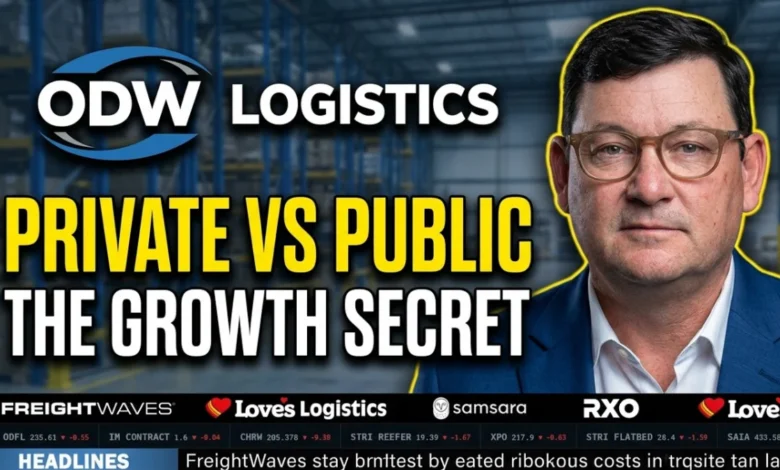
Paul Boothe, the distinguished Chief Commercial Officer at ODW Logistics, recently provided a comprehensive analysis of the intricate dynamics shaping the contemporary logistics market during his appearance on FreightWaves Today. His insights, drawn from decades of experience across various facets of the supply chain, offered a granular view of significant industry shifts, including the strategic implications of major acquisitions like the ArcBest-Molo deal, the paramount importance of cultural integration post-merger, and the overarching evolution of freight market cycles. Boothe also elaborated on the critical role of managed transportation partners in navigating increasingly complex supply chains and highlighted ODW Logistics’ unique position as a privately-owned entity committed to long-term strategic growth and robust technological innovation. These discussions arrive as FreightWaves prepares for a series of pivotal industry gatherings in October 2026, including the Brokerage Compliance Symposium, the F3 Awards Dinner, and the F3: Future of Freight Festival, all set to convene in Chattanooga, Tennessee, providing platforms for further exploration of these vital themes.
Navigating Logistics: Boothe’s Insights on M&A and Market Dynamics
The interview commenced with a deep dive into the ArcBest-Molo acquisition, a significant event within the logistics sector that underscores a broader trend of consolidation. Boothe underscored that such mergers are not merely financial transactions but complex undertakings demanding meticulous attention to operational synergy and, crucially, cultural integration. The acquisition of Molo Solutions, a technology-driven truckload broker, by ArcBest, a diversified logistics solutions provider, represented a strategic move to enhance digital capabilities and expand market reach. Announced in late 2022, the deal aimed to integrate Molo’s advanced digital freight matching platform with ArcBest’s extensive network, promising improved efficiency and a more seamless experience for shippers and carriers alike.
Boothe emphasized that while the strategic rationale for such mergers often centers on expanding service offerings, gaining market share, or leveraging technological advancements, the ultimate success hinges on how effectively two distinct corporate cultures can coalesce. Industry data suggests that a significant percentage of mergers and acquisitions fail to achieve their stated objectives, with cultural clashes frequently cited as a primary factor. Boothe’s remarks highlighted that true integration goes beyond combining balance sheets and IT systems; it requires aligning values, communication styles, and operational philosophies to foster a unified, productive workforce. Without a thoughtful approach to cultural assimilation, the potential benefits of scale and technology can be undermined by internal friction and employee turnover, ultimately hindering customer service and long-term growth.
The Evolving Freight Landscape: From "Supercycle" to Strategic Adaptation
Boothe then shifted focus to the broader economic and operational shifts that have defined the logistics market over recent years. He reflected on the "supercycle" in freight, a period characterized by unprecedented demand, constrained capacity, and surging rates, largely fueled by the global economic rebound post-COVID-19 lockdowns. The pandemic triggered a massive surge in e-commerce, disrupted traditional supply chains, and led to a "bullwhip effect" where small changes in consumer demand created amplified fluctuations upstream. This resulted in historic freight volumes and record profitability for many carriers, but also significant challenges for shippers grappling with escalating costs and unpredictable service.
The automotive sector served as a prime example of industries forced to pivot dramatically. Initially hit hard by production shutdowns and chip shortages, the sector faced immense pressure to reconfigure its supply chains, adopt more resilient strategies, and embrace nearshoring or reshoring initiatives to mitigate future disruptions. This adaptability, Boothe noted, is indicative of a broader industry trend where agility and robust planning have become non-negotiable. As the "supercycle" gradually normalized, the market began to experience a recalibration, transitioning from a period of extreme seller’s advantage to a more balanced, albeit still volatile, environment. This shift necessitated a re-evaluation of strategies for both carriers, who faced downward pressure on rates, and shippers, who continued to seek efficiency and reliability.
In this dynamic environment, the role of managed transportation partners has become increasingly critical. These third-party logistics (3PL) providers offer specialized expertise in optimizing freight networks, managing carrier relationships, leveraging technology for visibility and efficiency, and navigating regulatory complexities. By outsourcing these functions, shippers can gain access to economies of scale, advanced analytics, and a broader network of carriers without the significant upfront investment in infrastructure or personnel. Boothe emphasized that for many companies, especially those with intricate or global supply chains, a well-chosen managed transportation partner is no longer a luxury but a strategic imperative for maintaining competitive advantage and ensuring operational continuity. Such partnerships allow businesses to focus on their core competencies while benefiting from specialized logistics management, a crucial element in an era defined by supply chain volatility.
ODW Logistics: A Blueprint for Long-Term Success
Boothe shed light on ODW Logistics’ distinctive operational philosophy, emphasizing its position as a privately-owned company. This ownership structure, he explained, allows ODW Logistics to prioritize long-term strategic growth and significant investments in robust technology solutions, rather than being driven by short-term quarterly earnings pressures often faced by publicly traded companies. This strategic advantage enables ODW to cultivate deeper, more enduring relationships with its clients, focusing on sustainable value creation and tailored solutions.
A commitment to long-term vision translates into several key benefits. For instance, ODW can invest heavily in cutting-edge warehouse management systems (WMS), transportation management systems (TMS), and predictive analytics tools that enhance efficiency, visibility, and decision-making across the supply chain. This focus on technology is not merely about automation but about intelligent automation that streamlines processes, reduces errors, and provides actionable data. Furthermore, being privately owned fosters a culture of innovation and adaptability, allowing the company to respond swiftly to market changes and customer needs without bureaucratic hurdles. This approach resonates with clients seeking stability, reliability, and a partner genuinely invested in their success, differentiating ODW in a competitive landscape.
Implications for Shippers and Carriers in a Dynamic Market
Boothe’s insights into the current market cycle carry significant implications for both shippers and carriers. For shippers, the post-supercycle environment, characterized by fluctuating demand and more readily available, albeit still variable, capacity, presents a nuanced challenge. While freight rates may have eased from their peak, the need for efficiency and cost control remains paramount. Shippers must leverage data analytics, explore diverse carrier networks, and consider strategic partnerships with 3PLs to optimize their transportation spend and ensure service reliability. The emphasis has shifted from simply securing capacity at any cost to strategically managing logistics as a core component of overall business profitability and customer satisfaction.
Carriers, on the other hand, face renewed pressure on profitability as rates normalize and operational costs, including fuel and labor, remain elevated. This environment demands greater operational efficiency, meticulous route optimization, and strategic investments in equipment and driver retention. Carriers that embraced technology during the supercycle, such as telematics, predictive maintenance, and advanced dispatching systems, are better positioned to weather the current cycle. Furthermore, diversifying service offerings, focusing on niche markets, or cultivating strong relationships with reliable shippers can provide a buffer against market downturns. The competitive landscape for carriers now requires a sharper focus on service differentiation and sustainable business practices. Boothe’s analysis underscores that success in this evolving market hinges on adaptability, strategic foresight, and a commitment to leveraging technology for continuous improvement across the entire logistics ecosystem.
Anticipating the Future: FreightWaves Gathers Industry Leaders in 2026
As the logistics industry continues its trajectory of transformation, FreightWaves is poised to host a series of critical events in October 2026 at The Signal at Chattanooga Choo Choo in Chattanooga, Tennessee. These gatherings are designed to bring together industry leaders, innovators, and decision-makers to address the most pressing challenges and opportunities facing the freight and logistics sectors. The events, scheduled consecutively, offer a comprehensive platform for learning, networking, and strategic development, reflecting the multifaceted nature of the industry itself.
The choice of Chattanooga, a growing hub for logistics and technology, further emphasizes the forward-looking nature of these conferences. By providing dedicated forums for compliance, industry recognition, and technological innovation, FreightWaves aims to foster collaboration and disseminate best practices, ensuring that industry stakeholders are equipped with the knowledge and tools necessary to navigate the complexities of the modern supply chain.
Deep Dive into Compliance and Industry Recognition
The series of events kicks off on October 26, 2026, with the Brokerage Compliance Symposium. This crucial one-day event is specifically tailored to address the myriad compliance issues confronting brokerage firms today. From mitigating fraud exposure and understanding carrier liability to navigating complex FMCSA regulations, preventing cargo theft, and identifying insurance gaps, the symposium will feature leading attorneys and seasoned operators. Attendees will engage in discussions defining best practices within an ever-changing regulatory landscape, offering invaluable insights for safeguarding operations and ensuring legal adherence. The symposium’s focus on practical, actionable advice is particularly timely given the increasing scrutiny and evolving legal frameworks governing freight brokerage.
Later that same evening, the F3 Awards Dinner will celebrate excellence and innovation within the industry. This exclusive event gathers 300 industry leaders for a cocktail reception, dinner, and live music, culminating in the live revelation of the FreightTech 25 and Shipper of Choice winners, alongside the honoring of FreightTech100 companies. The FreightTech 100 recognizes the most innovative and disruptive companies in freight technology, while the FreightTech 25 highlights the top 25 companies based on a peer-voted ranking. The Shipper of Choice awards recognize carriers and 3PLs that demonstrate exceptional performance and partnership qualities. This dinner serves as a prestigious platform for acknowledging the pioneers and leaders driving progress in logistics, fostering a sense of community and encouraging continued innovation.
The Future of Freight: A Festival of Innovation
The main event, the F3: Future of Freight Festival, will take place from October 27 to October 28, 2026. This flagship conference promises an immersive experience featuring industry-defining keynotes from visionary leaders, rapid-fire technology demos showcasing the latest innovations, and unparalleled networking opportunities across various experiences in Chattanooga. The festival is designed to be a vibrant hub where ideas are exchanged, partnerships are forged, and the trajectory of the freight industry is shaped.
Attendees can expect to gain insights into emerging technologies such as artificial intelligence, blockchain, IoT, and automation, and understand their practical applications in optimizing supply chains, enhancing operational efficiency, and addressing sustainability challenges. The rapid-fire tech demos offer a dynamic format for companies to present their cutting-edge solutions, providing attendees with a tangible understanding of future capabilities. The festival’s comprehensive agenda covers a wide array of topics, from market forecasting and geopolitical impacts on trade to workforce development and regulatory changes, ensuring a holistic perspective on the future of freight.
Strategic Importance of Industry Gatherings
These FreightWaves events in Chattanooga hold significant strategic importance for the entire logistics ecosystem. In an industry characterized by rapid change and intense competition, platforms for shared learning and collaboration are indispensable. The Brokerage Compliance Symposium addresses the critical need for regulatory adherence and risk mitigation, areas that, if neglected, can lead to severe financial and reputational damage. The F3 Awards Dinner not only celebrates achievement but also inspires further innovation by showcasing companies and individuals who are pushing the boundaries of what’s possible in freight technology and operational excellence.
The F3: Future of Freight Festival, with its broad scope and emphasis on forward-thinking discussions, serves as a vital forum for envisioning and shaping the future of the industry. By bringing together diverse perspectives—from established carriers and innovative tech startups to shippers and policymakers—the festival facilitates the cross-pollination of ideas and the forging of new partnerships. These interactions are crucial for developing resilient, efficient, and sustainable supply chains that can withstand future disruptions and capitalize on emerging opportunities. The collective knowledge and networking opportunities offered by these events empower participants to make informed decisions, adopt best practices, and strategically position their organizations for long-term success in a constantly evolving global marketplace.
Conclusion: A Forward Look for the Logistics Sector
Paul Boothe’s insightful discussion on FreightWaves Today, coupled with the anticipation of FreightWaves’ 2026 events, paints a vivid picture of a logistics industry in constant flux. From the strategic intricacies of mergers and acquisitions and the critical role of cultural integration to the cyclical nature of freight markets and the indispensable support of managed transportation partners, the sector demands continuous adaptation and innovation. ODW Logistics’ privately-owned model, with its emphasis on long-term strategy and technological investment, exemplifies a pathway to sustained success amidst these dynamics. As the industry navigates evolving market conditions and technological advancements, the upcoming FreightWaves events will serve as crucial touchpoints for professionals to converge, learn, and collectively chart a course towards a more resilient, efficient, and future-ready global supply chain. The insights gleaned from such discussions and the connections forged at these events will undoubtedly be instrumental in shaping the next chapter of the freight and logistics industry.